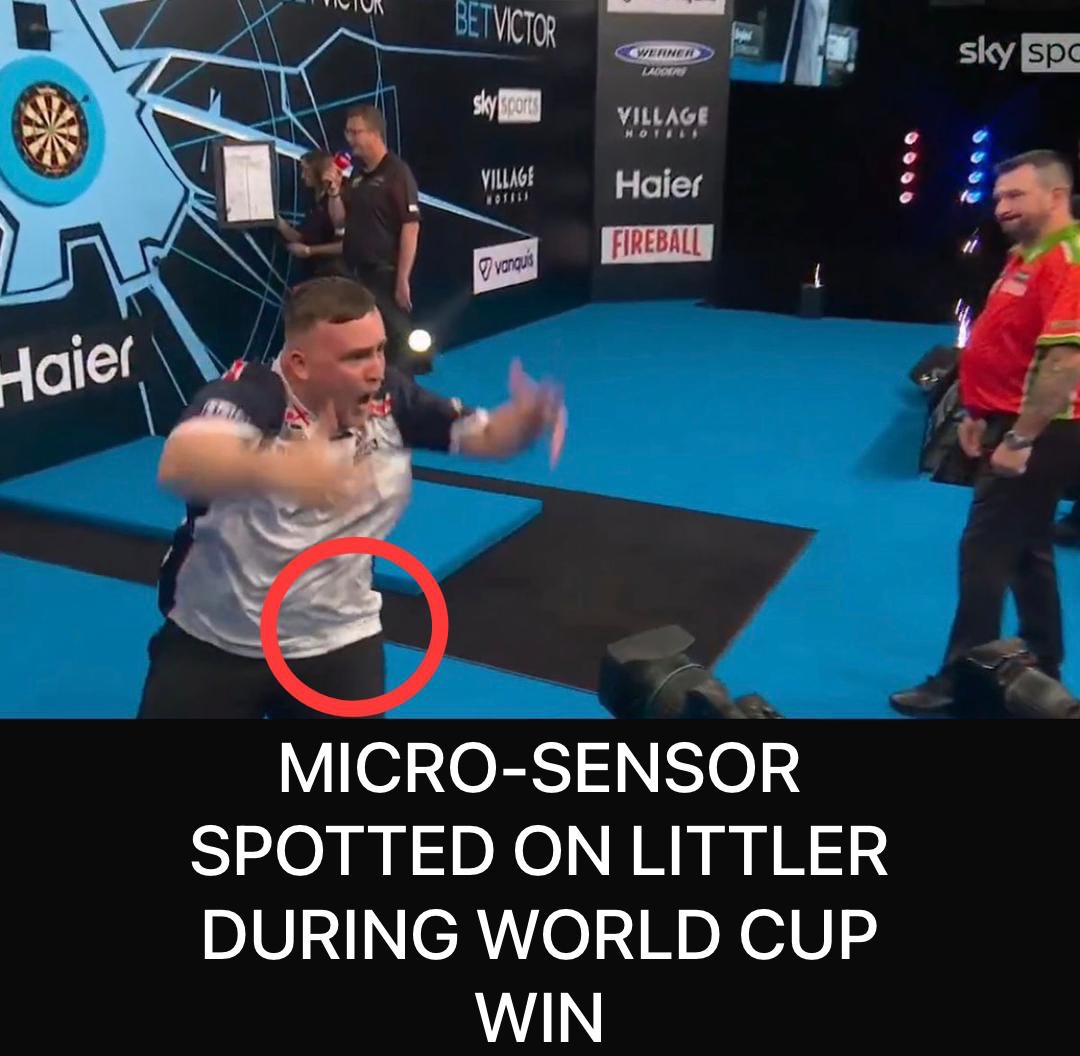
Tensions exploded as Team Wales officially filed a complaint against Team England’s teenage sensation Luke Littler, alleging the 19 year-old darts prodigy used an unauthorized biometric sensor to gain a “significant and unfair advantage” during practice sessions.
The accusation, released in a blistering statement by Welsh officials late Wednesday, claims that Littler—already famous for his record-breaking averages and relentless finishing—wore a modified wrist-mounted sensor during closed warm-ups. According to Team Wales, the device was not merely for fitness tracking but was engineered to provide real-time micro-adjustments to his throwing motion.
“Our technical analysts observed irregularities in Mr. Littler’s release point consistency during the pre-match corridor check,” said Dr. Elen Price, head of performance integrity for Team Wales. “The device appears to deliver sub-millimeter haptic feedback, correcting wrist pronation milliseconds before release. That is not sport; that is cyborg darts.”
The complaint, filed with the event’s governing body just hours before the scheduled group stage match, includes slow-motion video evidence that Wales claims shows a subtle LED pulse on Littler’s wristband—a device not listed on his official equipment registration.
England’s camp dismissed the allegations as “desperate gamesmanship.” Team England manager Colin Lloyd fired back: “Luke’s talent is 100% natural. The ‘sensor’ is a $20 fitness tracker that monitors heart rate. Wales lost their last three head-to-heads. This is sour grapes, plain and simple.”
Littler, who has taken the darts world by storm with nine-dart finishes and a sudden global fanbase, remained characteristically cool. In a brief statement from the team hotel, he said: “I play with the same darts, same grip, and same concentration I’ve had since I was 14. If they think a wristband is why I hit tops, let them wear one too.”
Neutral pundits are divided. Some note that wearable technology rules remain vague in darts, unlike in swimming or cycling. Others argue the complaint is a strategic move to rattle Littler ahead of a high-stakes tie.
“This could backfire spectacularly,” said former world champion and now commentator, Mark Webster. “You don’t poke a dragon who averages 107. You just don’t. Littler is at his best when he feels wronged.”
An emergency hearing is scheduled for Thursday morning. If the protest is upheld, Littler could face a fine, equipment confiscation, or—in a worst-case scenario—disqualification from the singles competition.
For now, the sensor sits in a sealed evidence bag. And Luke Littler sits in his hotel room, likely practicing his throw, sensor or no sensor.