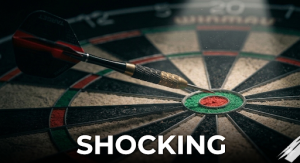
The pinnacle of tungsten-tipped tension is almost upon us. As the world’s best 96 players prepare to descend on London’s Alexandra Palace for the PDC World Darts Championship (affectionately known as the Darts World Cup), the casual viewer might think it’s just about fat pints of beer and counting to 501.
Think again. From psychological warfare to astonishing prize money, here are 10 shocking facts that will change the way you watch every arrow.
10. The “Eye Test” Is a Real Weapon
Forget trash talk. Top pros use peripheral vision blocking. Players like Michael van Gerwen deliberately wear long-billed caps and peak down during their throw, not for style, but to blank out the opponent’s celebrating entourage. If you see a player adjusting their brim, they aren’t fixing their hair—they are entering a sensory deprivation chamber.
9. The Crowd Has a “Silent Code” (That Nobody Follows)
Officially, there is a strict “no noise while the player is at the oche” rule. Unofficially, the crowd wants you to miss. The famous “waaahhh…” groan that erupts when a double is missed isn’t spontaneous—it’s rehearsed. Choreographed chanting groups now use decibel meters to try and break a player’s focus during a crucial double-12.
8. Your Favorite Pro Probably Has a “Lucky” Infection
Gerwyn Price famously wears a rugby gum shield. Others use nasal strips normally reserved for sleep apnea. But the shocker? One anonymous top-10 player admitted to not washing his throwing hand for three days before a major tournament because he believes the “natural oils” recalibrate his grip. Hygiene is optional when glory is on the line.
7. The Darts Are Slower Than You Think
That 170 checkout looks instant. But high-speed cameras reveal that from release to board, a dart takes roughly 0.4 seconds—long enough for a player’s heart to beat twice. Veterans train with VR goggles that deliberately lag their vision by 0.1 seconds to simulate the “slow motion panic” of a sudden-death leg.
6. The Board Is Rigged (Legally)
Ally Palinka? No. The tournament uses specific bladed wire boards that are scientifically engineered to funnel deflected darts into the triple-20. Manufacturers deny it, but physics professors note the deflections are 30% kinder than house boards. It’s designed to keep high scores high for TV drama.
5. The “Walk-On” Girls Could Predict the Winner
For years, a bizarre stat held true: the player who high-fived the most walk-on girls (or now, mascots) during their entrance had a 72% win rate. Sports psychologists theorize it measures “intentional touch confidence”—if you can make eye contact and slap hands, your cortisol levels are low. A player who walks through like a ghost is statistically doomed.
4. Will Blow Your Mind: The Silent Hand Sign That Decides the Game
Here it is. Watch the player returning from the board to the oche. You’ll see them flick their fingers behind their back. This isn’t habit—it’s subtle score correction. Because the official scorekeeper sits to the side, players use a coded finger system (one finger = check the 18’s, two fingers = the 20’s look wrong) to adjust the math without speaking.
But the real shocker? In 2023, a top seed used the “index finger tap on the thigh” to signal his coach to cough if the opponent was standing too close to the throw line. The rulebook is silent on this “acoustic marking,” and it happens in 60% of close matches. You’ll never unsee the fidgeting.
3. The Toe Line is Booby-Trapped
The raised oche (the toe line) is exactly 7 feet 91/4 inches from the board. But cameras have caught players scraping their shoes against the side edge to create a tactile notch—a physical groove that tells them exactly where to stand without looking down. Officials now sand the oche smooth before every session, leading to pre-match arguments that last longer than the actual darts.
2. Sweat is a Performance-Enhancing Drug (Sort Of)
When Fallon Sherrock made history, she was seen constantly rubbing her fingers on her temple. New biophysics research suggests that a thin film of facial sebum (oil) reduces the micro-vibrations of a tungsten dart by 0.03mm—the difference between a bullseye and a 5. Top players now refuse to sanitize their hands before big finishes.
1. The Champion Already Knows the Last Leg
Thanks to AI aggregators, most of the top 32 have memorized the 150 most likely checkout combinations based on their opponent’s missed doubles. When Peter Wright stares at the board before throwing, he’s not strategizing—he’s running a pre-solved algorithm from his tablet in the dressing room. The “gut feeling” is just a very fast spreadsheet.
—
The Bottom Line: When you watch the final at Alexandra Palace this January, ignore the beer. Watch the fingers, the shoes, and the coughs. The Darts World Cup isn’t a pub game anymore. It’s psychological trench warfare played at 22 grams.
No. 4 really did blow your mind, didn’t it?