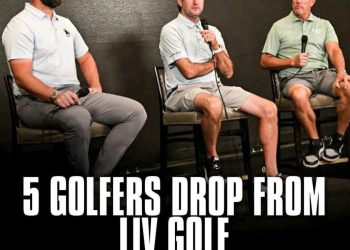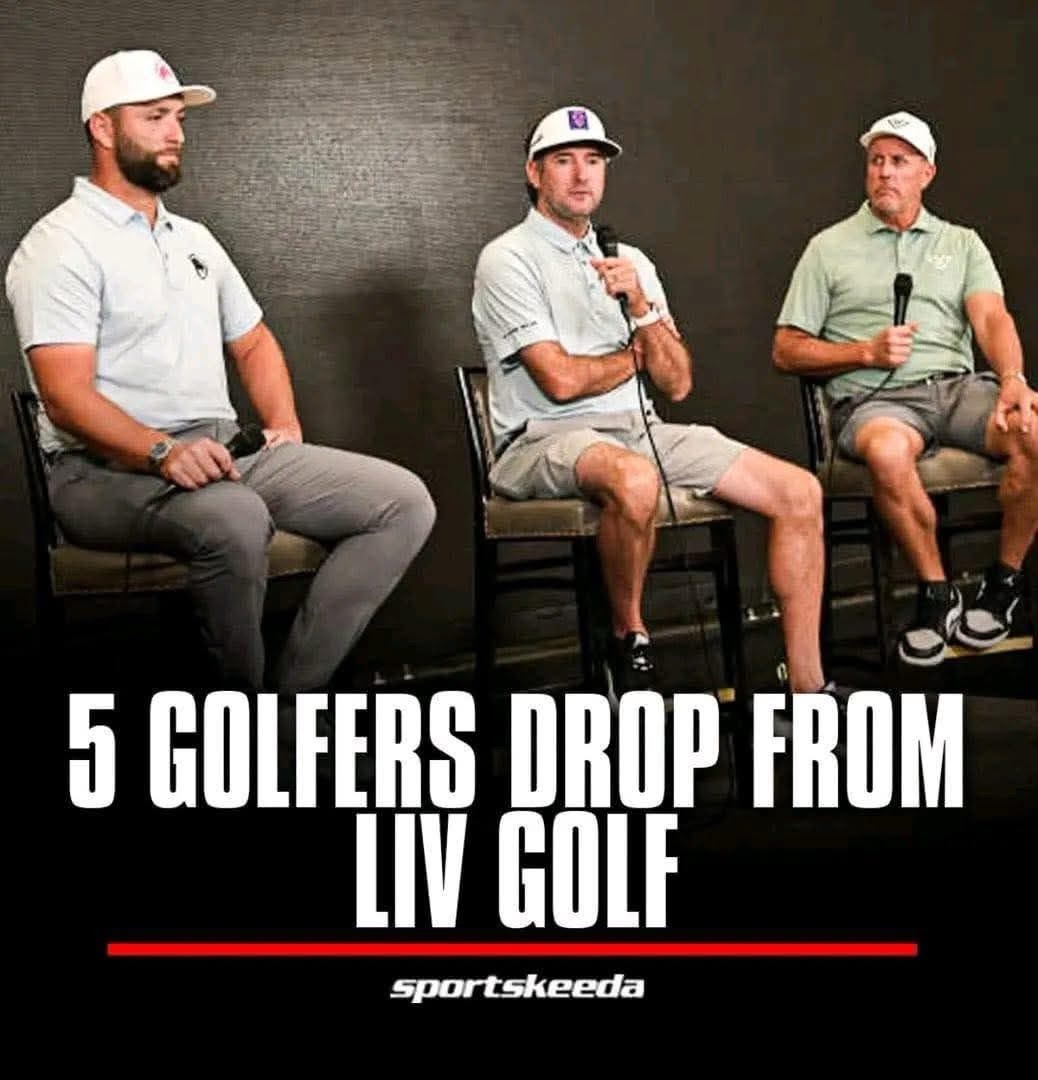
In a seismic, league-altering development, five of LIV Golf’s biggest names—including major champions Jon Rahm and Bryson DeChambeau—have resigned from the Saudi-backed circuit effective immediately, following the abrupt withdrawal of its primary sovereign wealth fund investors, multiple sources confirmed Thursday.
The stunning mass exodus also includes former Masters champion Patrick Reed, fan-favorite Harold Varner III, and rising star Talor Gooch. All five players are reportedly in active negotiations to rejoin the PGA Tour, which has already begun reinstating eligibility for players who had been indefinitely suspended.
The chain reaction was triggered just after midnight when Saudi Arabia’s Public Investment Fund (PIF) issued a terse statement announcing it was “reallocating strategic investments away from professional golf ventures,” citing “unresolved governance disputes and shifting economic priorities.” While the fund did not explicitly say it was bankrupting LIV, insiders confirm player payroll accounts have been frozen pending audit.
“The money tap didn’t just slow down—it got ripped out of the wall,” said one LIV team operations manager, speaking on condition of anonymity. “Players were told this morning that promised bonuses for the remainder of the season are void. Within two hours, agents were on the phone with the PGA Tour.”
Rahm, who reportedly signed a $300 million deal to join LIV just 15 months ago, released a carefully worded statement: “My priority has always been competing against the best in the world at the highest level. With the current uncertainty, I have exercised my contractual exit clause. I look forward to returning to the PGA Tour.”
DeChambeau, never one for subtlety, posted a video on X swinging a driver before saying, “The circus is closed. Let’s go win some real tournaments.”
The PGA Tour, which had been locked in a bitter antitrust battle with LIV, immediately pivoted to a posture of magnanimous victory. Commissioner Jay Monahan said in a hastily arranged press conference: “We have always believed in competitive merit. Qualified players who wish to rejoin our Tour will be welcomed back—subject to fulfilling reinstatement requirements, including a one-event probationary period and a mandatory meeting with the Player Advisory Council.”
However, not everyone on the Tour is celebrating. Reigning Player of the Year Scottie Scheffler was blunt: “They took hundreds of millions to burn our Tour down. Now they want to walk back in like nothing happened? There needs to be consequences.”
Rory McIlroy, once LIV’s fiercest critic but recently more conciliatory, struck a pragmatic tone: “If they want to play again and the rules allow it, fine. But don’t expect a hero’s welcome.”
For LIV Golf, the future is now existential. With its top five draws gone and no visible funding to pay remaining players like Brooks Koepka or Dustin Johnson, the league has canceled its scheduled event in Hong Kong next month. An internal memo obtained by this outlet suggested the league may “suspend operations indefinitely” by April 15.
Meanwhile, social media erupted. Fans mocked the defections with memes of the five stars crawling back through airport security doors. Others expressed relief that the “golf civil war” might finally be over.
Legal experts note, however, that the fallout is just beginning. The PGA Tour still faces a pending Department of Justice review of its past dealings with LIV, and the players themselves may face clawback lawsuits from LIV creditors.
But for now, the balance of power in men’s professional golf has lurched violently back to the PGA Tour—with five prodigal stars ready to tee it up as early as next week’s Valero Texas Open.
“This is the biggest power shift in golf since the Tour split from the PGA of America in 1968,” said veteran golf historian Alan Shipnuck. “The only question is: will the fans forgive them, or will every comeback press conference be drowned out by the sound of cash register echoes?”
One thing is certain—the whispers of “merger” have been replaced by the roar of a route.