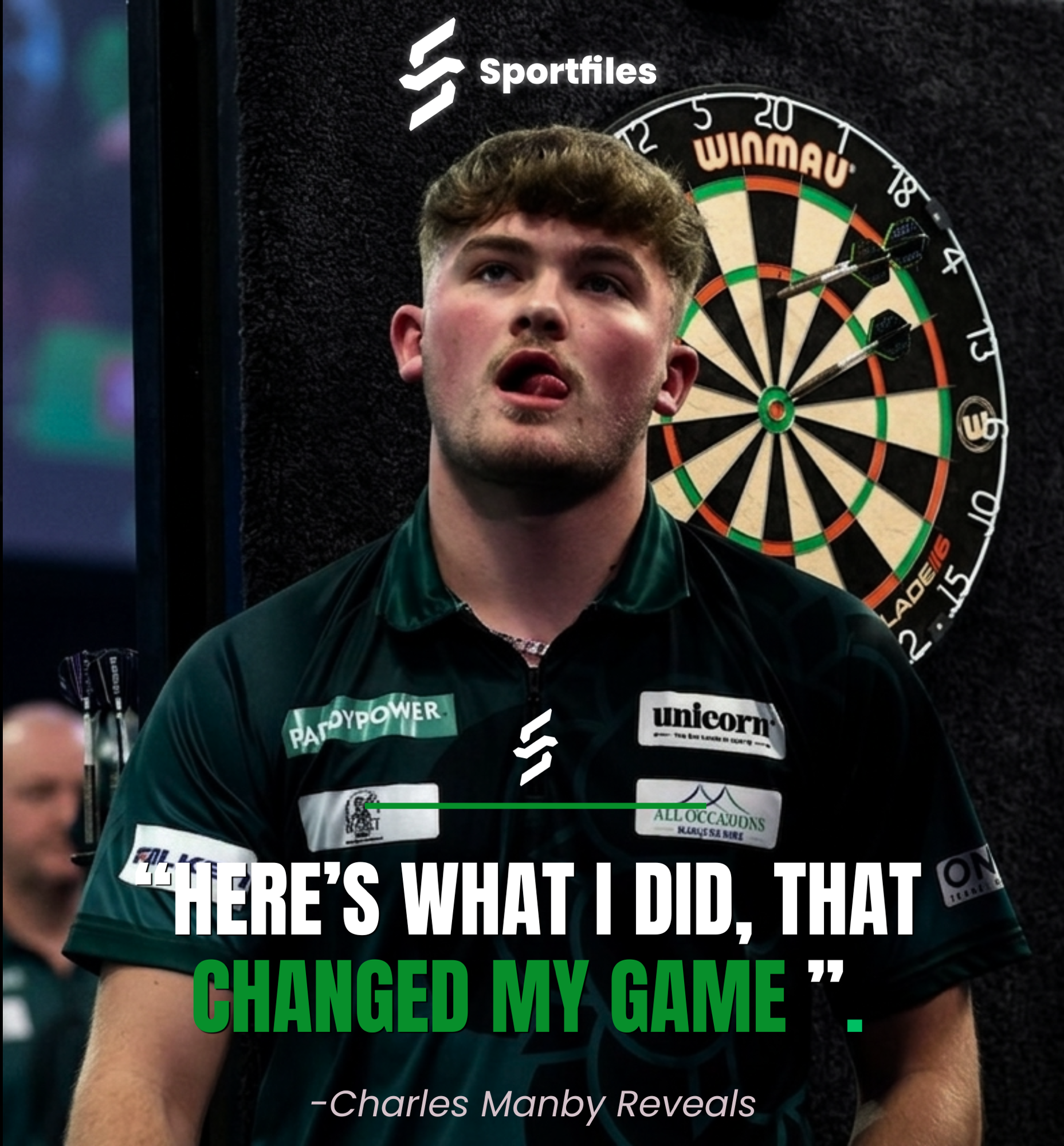
After years of frustrating inconsistency and unfulfilled potential, rising star Charlie Manby has finally opened up about the single, bold decision he credits with rescuing his career—and, he says, “changing everything.”
The 27-year-old, once hailed as a prodigy but dogged by middling results, sat down for a candid interview following his breakthrough performance at the recent Windsor Open. In a sport where superstition and routine often rule, Manby’s revelation has turned heads.
“I was stuck,” Manby admitted. “I had the technique. I had the fitness. But my head was a mess. Every time I stepped onto the big stage, I’d freeze. I’d play safe, and safe doesn’t win.”
That all changed, he says, in a nondescript hotel room the night before a low-tier regional event—an event he had seriously considered skipping.
“I looked in the mirror and thought, ‘What’s the worst that can happen? I lose again?’ So I made a decision. I stripped everything back. No coaches yelling in my ear. No stats on my phone. No game plan.”
The bold move? Manby abandoned months of tactical drilling in favor of pure, instinctive play.
“I decided to play like the 12-year-old who fell in love with the game. No fear. No overthinking. If I saw a gap, I went for it. If I felt like an audacious drop-shot, I played it. I stopped trying to be perfect and started trying to be dangerous.”
The results were immediate and staggering.
The next morning, Manby dismantled the tournament’s third seed in straight sets. He followed that with a string of victories that took him to the final, where he clinched his first professional title in four years.
“That win wasn’t luck,” he said. “It was freedom. I finally stopped playing not to lose, and started playing to win.”
Since that weekend, Manby’s form has been nothing short of electric. His world ranking has climbed 42 places in six months. He has recorded victories over three top-20 players—feats that had previously eluded him.
His coach, Elaine Thorpe, who initially opposed the shake-up, has since come around.
“I thought he was being reckless,” Thorpe admitted. “But Charlie showed me that sometimes paralysis by analysis is real. His decision to trust his gut has unlocked a level of aggression and creativity I didn’t know he had.”
Manby is careful not to dismiss preparation entirely. “I still practice. I still work hard. But the mental shift—the decision to stop apologizing for my shots—that was everything.”
Fans have noticed the transformation. Social media is filled with clips of Manby’s newfound audacity: cross-court winners from impossible angles, bold serves down the middle when a safe corner shot seemed obvious, and a swagger that was absent for most of his career.
“People call me fearless now,” he said with a smile. “I’m not fearless. I’m just not afraid to fail anymore. And that’s the decision that changed everything.”
As Manby prepares for the upcoming national championships, he carries a simple reminder written on his wrist tape: “Be bold.”
“I don’t know if I’ll win a major,” he said. “But I know I’ll never go back to who I was. That guy was safe. This guy is free. And free is dangerous.”