Stephen A. Smith has unleashed a blistering re-assessment of the golf legend’s conduct—arguing that the world’s response should have been far less sympathetic and far more punitive.
During a fiery monologue on First Take Tuesday morning, Smith revisited the March incident in which Woods suffered compound leg fractures after his Genesis GV80 crossed a median and tumbled down a steep hillside in Rancho Palos Verdes. While investigators ultimately cited unsafe speed for the conditions—not intoxication—Smith declared that the grace afforded to Woods was a mistake.
“I’m sorry, but I’ve kept quiet long enough,” Smith said, slamming the desk. “We all saw the car. We all know the history. Tiger Woods was found unconscious, slumped over, with pills in his system—prescription, yes, but we’ve danced this dance before. The man was driving 40 miles over the limit on a downhill curve he knew like the back of his hand.”
Smith pointed to Woods’ arrest in Florida for DUI, where a toxicology report revealed active ingredients of several prescription drugs, including the painkiller Vicodin and the sleep aid Ambien. While no alcohol or illegal substances were found after the crash, Smith argued that the pattern was undeniable.
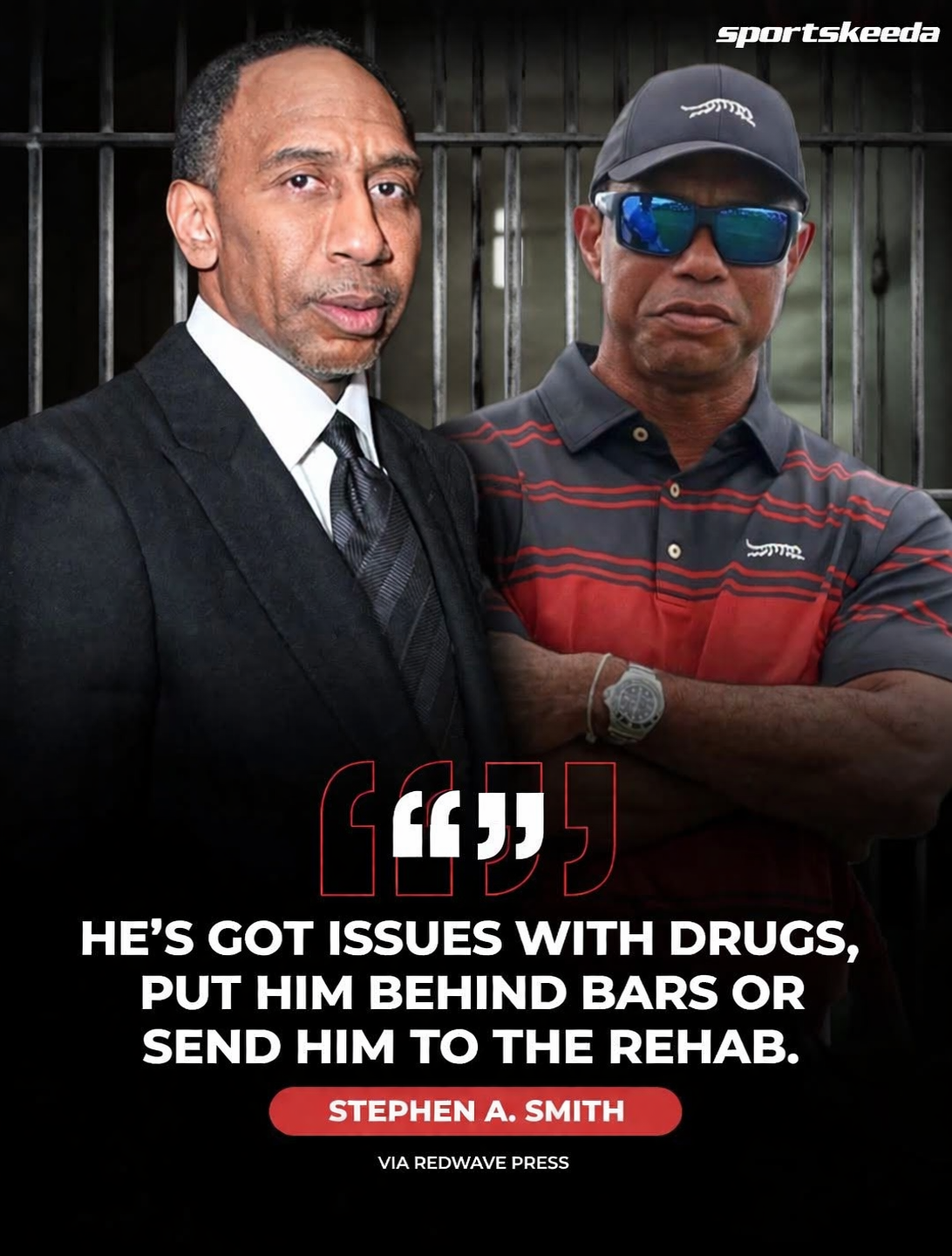
“I don’t care about his legacy. I don’t care about the Masters. At some point, you have to save the man from himself,” Smith continued. “Put him behind bars or send him to rehab. Pick one. Because letting a legend limp away with another ‘get well soon’ card is how people end up dead—either him or someone’s mother driving on that same road.”
Smith reserved particular scorn for the public and media reaction in the crash’s immediate aftermath, which focused almost exclusively on Woods’ miraculous recovery and golf return.
“We celebrated him hobbling around at Augusta two years later. We cried when he made the cut. Are you kidding me? He could have killed somebody! If that was your neighbor, you’d want his license suspended for a decade.”
The rant quickly went viral, drawing sharp divides on social media. Supporters praised Smith for “saying what no one would say” about Woods’ repeated behind-the-wheel incidents. Critics, however, called the take “performative outrage” given that no criminal charges were filed and that Woods has since maintained sobriety with routine public support from his children.
Woods’ agent, Mark Steinberg, declined comment when reached by ESPN. A representative for the golfer noted that Woods voluntarily entered a “comprehensive treatment program” following the 2017 DUI and has submitted to regular drug testing as part of an ongoing health management plan related to his chronic back and leg pain.
Smith, undeterred, ended his segment with a final warning: “I love Tiger. Greatest winner I’ve ever covered. But love means telling the truth. And the truth is—he ran out of second chances three crashes ago. It’s bars or rehab. No more fairways until he proves he’s not a threat to himself or the rest of us.”
As of press time, Woods has not publicly responded to Smith’s comments. The 15-time major champion continues to focus on his TGR Ventures and announced a limited playing schedule for 2026.